
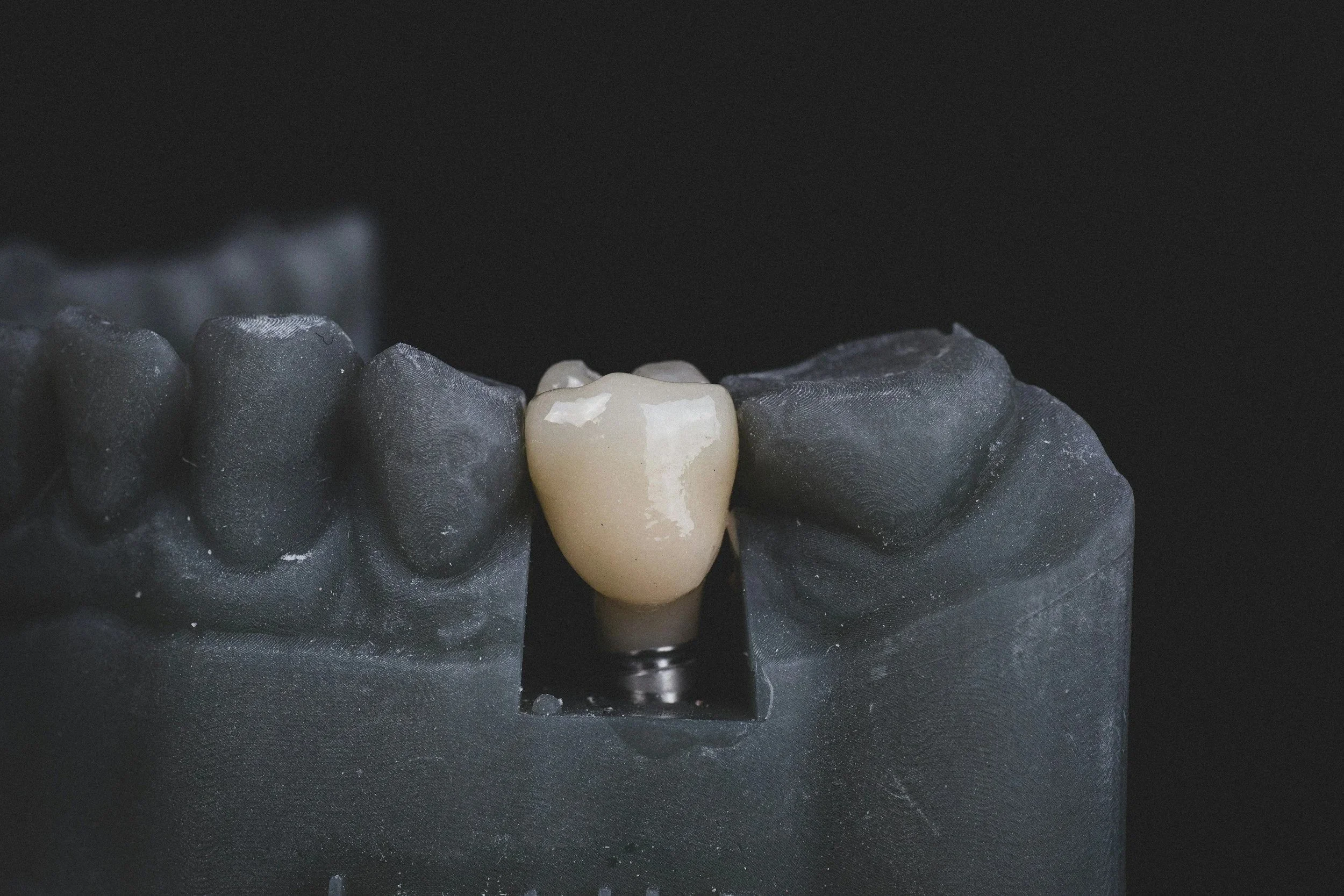
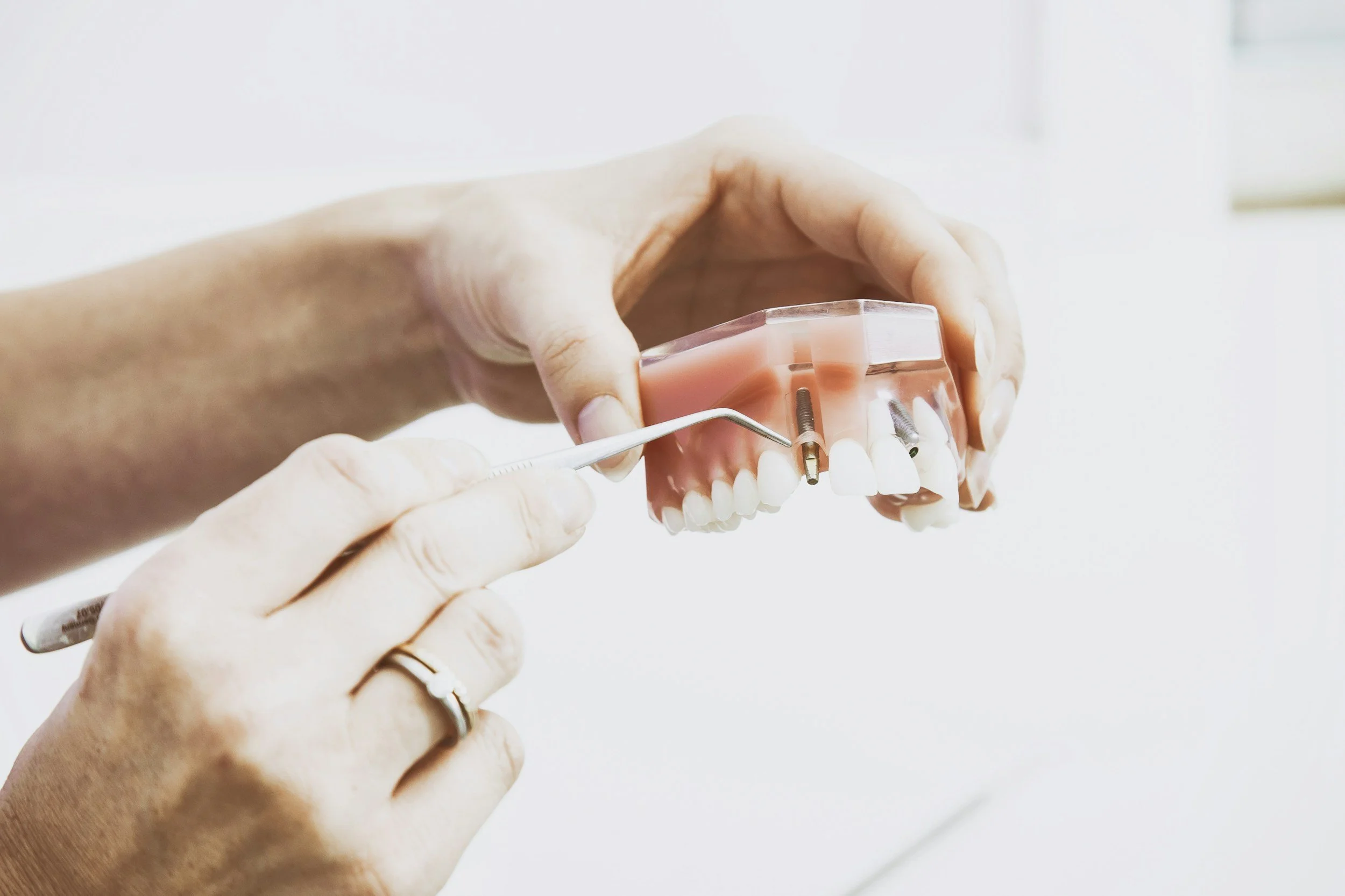
Crowns, conventional bridges or dentures may not be your only options when replacing missing teeth. Dental implants offer a smile that looks and feels very natural. Surgically placed below the gums over a series of appointments, implants fuse to the jawbone and serve as a base for individual replacement teeth, bridges or a denture.
Implants offer stability because they fuse to your bone. Integration of the implants into your jaw also helps your replacement teeth feel more natural and some people also find the secure fit more comfortable than conventional substitutes. Candidates for dental implants need to have healthy gums and adequate bone to support the implant.
DENTAL IMPLANTS
Frequently Asked Questions
Still have questions? Give our front office a call and they will do their best to assist you!
-
Dental implants are the most realistic tooth replacements available. Implants begin with a surgically placed post that is securely anchored into the jawbone. The bone surrounding the anchor will heal in approximately six months. With a completely solid and stable anchor point, an artificial tooth is then installed. The end result is a new artificial tooth that is virtually indistinguishable from a natural tooth, both from an aesthetic and functional standpoint. In cases where several teeth are missing, dental implants can also act as the teeth to which bridges are fixed, again perfectly mimicking the function of healthy, natural teeth.
-
You may be a candidate for dental implants if you have one or more missing teeth and are in good overall oral health. Healthy gums and enough jawbone to support the implant are important factors, though bone loss can sometimes be treated. Non-smokers or those willing to quit during treatment tend to have better outcomes. The best way to know for sure is through a dental exam and imaging, where your dentist can evaluate your bone, gums, and overall health to determine if implants are right for you.
-
Modern dentistry makes routine tooth extractions relatively comfortable, painless procedures. For seven days after the extraction, your tooth socket will require some care. You will be instructed to steer clear of the empty tooth socket when brushing your teeth. Some bleeding can be expected, and pain medication may be prescribed for residual discomfort.
-
An implant denture is a type of denture that is secured in place using dental implants instead of relying only on the gums. The implants act like artificial tooth roots, helping keep the denture stable and comfortable while you eat and speak. Implant dentures reduce slipping, improve chewing ability, and feel more natural than traditional dentures. They can be removable or fixed, depending on the treatment plan and your needs.